English
 中文简体
中文简体 Español
In the realm of mechanical engineering, the planetary gearbox stands as one of the most efficient and reliable components in power transmission systems. From automotive applications to industrial mach...
See Details
Selecting between a WP worm gear reducer and a SWL worm gear screw jack is not about which component is “better” — it’s about matching the mechanical architecture to duty cycle, load orientation, and linear vs. rotary output. While both can be configured as right-angle drives, their internal physics differ significantly: a right angle worm gear reducers family relies on sliding friction and a hardened worm meshing with a bronze wheel, whereas a linear motion screw jack uses a rotating worm to drive a lifting nut or screw shaft. This article provides a technical roadmap for designers choosing between WPA single-stage worm gearbox, double-stage worm gearbox, SWL worm gear screw jack and T Series steering spiral bevel gearbox for right-angle power transmission.
Consider a conveyor adjuster requiring 500 Nm output torque at 30 rpm with intermittent operation: a WPA single-stage worm gearbox (ratio 30:1) achieves 85% efficiency and self-locking. The same torque applied to a lifting table that must hold position under vibration? Here a SWL worm gear screw jack provides mechanical advantage and inherent self-locking without external brakes. Understanding these nuances prevents oversizing and reduces total cost of ownership.
Enclosed right angle worm gear reducers using a hardened steel worm (case-hardened alloy steel, 58–62 HRC) driving a phosphor-bronze wheel. Available as WPA single-stage worm gearbox (ratios 5:1 to 60:1) or double-stage worm gearbox (ratios up to 3600:1). Ideal for pure rotary motion, conveyor drives, and agitators.
Integrates a worm drive with a trapezoidal or ball screw nut. The worm rotates a gear nut (or screw shaft), converting rotation into linear displacement. Load capacities from 2.5 kN to 500 kN. Standard SWL worm gear screw jack designs feature self-locking and 25% duty cycle at max load.
| Parameter | WP Worm Gear Reducer | SWL Screw Jack |
|---|---|---|
| Output motion | Rotary (shaft) | Linear (screw or nut moves) |
| Efficiency (single-stage) | 70% – 92% (depending on ratio) | 15% – 25% (trapezoidal), 70%+ (ball screw) |
| Self-locking ability | Yes, ratios >30:1 typically | Yes, built-in for trapezoidal screws |
| Backlash | 15–30 arcmin (standard) | 0.1–0.3 mm (screw dependent) |
| Typical service factor | 1.0 – 1.5 | 1.5 – 2.0 for lifting |
For pure right-angle power transmission without high reduction, the T Series steering spiral bevel gearbox offers 1:1 or 2:1 ratios with 95–98% efficiency, but it does not provide self-locking or high torque multiplication. By contrast, bevel reducer solutions excel when speed reduction is minimal and input/output shafts must intersect at 90 degrees. However, for lifting or positioning where load holding is critical, a self-locking worm gearbox (WP or SWL) eliminates external brakes.
A WP worm gear reducer operating at 1450 rpm input with ratio 40:1 produces ~360 Nm output but generates significant heat (up to 85°C sump temperature). Synthetic oil (PAO or PAG) can increase thermal capacity by 15–20%. For continuous operation above 50% duty, forced cooling or a double-stage worm gearbox reduces sliding velocity on the first stage, lowering thermal stress.
SWL screw jacks accept higher axial loads (rated directly). WP reducers have moderate radial overhung load capacity on output shaft: typically 2x output torque rating in kN at shaft center. When heavy sprockets or pulleys are attached, reinforcing the bearing housing or choosing a larger frame size prevents premature seal failure.
When designing a compact, high-ratio right-angle drive, the choice between WPA single-stage worm gearbox and a double-stage worm gearbox is governed by efficiency vs. ratio requirements. A single-stage unit provides ratios from 5:1 to 60:1 with efficiency up to 92% (5:1) dropping to 70% at 60:1. For ratios above 70:1, a double-stage unit (two worm stages in series) achieves ratios up to 3600:1 but with overall efficiency typically 45–65%.
In mobile crane outriggers, a double-stage worm gearbox reduces input motor torque by factor 300×, enabling small DC motors. Conversely, for packaging machinery where efficiency is prioritized, a single-stage WP unit avoids excessive energy loss.
For specialized axes where space is constrained, a customized angle reducer may be required beyond standard WP worm gear reducer or SWL variants. Typical modifications include hollow output shafts, input flanges for servo motors, extended centers, or stainless steel housings for washdown environments. When reviewing a worm gear reducer catalogue, pay attention to the modification codes (e.g., “WPAF” for flange-mounted single-stage units). Custom double-stage designs can be arranged by coupling two standard gearboxes or by machining an integrated housing – the latter reduces footprint by 25% but increases NRE cost.
For vertical lifting applications (platforms, scissor lifts, valve actuators), the SWL worm gear screw jack dominates due to its integrated thrust bearing and rigid screw guidance. Key sizing criteria:
When two or more jacks are synchronized with a common shaft and T Series steering spiral bevel gearbox, you create a multi-point mechanical lifting system with perfect phase synchronization. Example: a 6-ton stage lift with four SWL jacks (50 kN each) linked by T bevel boxes and a central WP worm reducer ensures all corners move within 0.5 mm.
The term self-locking worm gearbox is often misused. A worm drive locks when the lead angle is less than the friction angle (typically tanλ < μ). For bronze-steel pairs with μ≈0.08–0.12, self-locking occurs at lead angles below 4-5 degrees, which corresponds to ratios above 30:1 for a single-start worm. Both WP reducers and SWL jacks with trapezoidal screws achieve static self-locking. However, under vibration (e.g., mobile machinery, seismic zones), dynamic self-locking may fail; an external brake is then recommended. A double-stage worm gearbox has two separate worm interfaces, each providing redundant locking — ideal for industrial lift tables.
For a customized angle reducer with non-standard shaft orientation, WP housing can be machined for any mounting position (B3, B5, V5). SWL jacks are offered with trunnion, flange, or clevis mounts.
| Component | Oil change interval | Wear parts | Typical L10 life (hours) |
|---|---|---|---|
| WP worm reducer | 5000 hrs or yearly | Bronze wheel, oil seals | 12,000–25,000 (depending on load) |
| SWL screw jack (trapezoidal) | Grease every 2000 strokes | Lifting nut, thrust bearing | 2×10⁶ cycles at 50% load |
| T Series bevel box | 8000 hrs or 2 years | Spiral bevel gears | 30,000+ |
Monitoring oil temperature in a double-stage worm gearbox is critical: the second stage runs hotter due to cumulative inefficiency. Install a PT100 sensor when ambient exceeds 40°C. For SWL jacks, regular re-greasing of the screw threads prevents accelerated wear; a centralized lubrication system extends life by 300% in dusty environments.
A1: A WP worm gear reducer delivers rotary output torque through a shaft, while an SWL worm gear screw jack converts rotary input into linear motion (raising/lowering a screw or nut). Choose WP for conveyors, mixers, or rotary tables; choose SWL for lifting platforms, valve actuation, or presses.
A2: Yes, but thermal limits must be respected. A double-stage worm gearbox typically has 55–65% efficiency; for continuous operation at full load, reduce input power or add external cooling (fan or water jacket). Many double-stage units are rated for 60% duty at nominal torque.
A3: No. T Series steering spiral bevel gearbox has very low friction and high efficiency; they cannot hold a load when the motor is off. For load holding, combine a T bevel box with a brake motor or add a self-locking worm gearbox upstream.
A4: For rotary positioning, a WPA single-stage worm gearbox with reduced backlash (≤10 arcmin) plus a servo motor gives accurate indexing. For linear positioning, an SWL screw jack with a precision ground screw and encoder can achieve 0.02 mm repeatability.
A5: Switch to a double-stage worm gearbox to split the reduction, which lowers sliding speed on each stage. Alternatively, use synthetic oil (viscosity ISO VG 220 vs 320 mineral) to reduce internal friction by 10-15%. For severe cases, add a cooling fan or external oil circulation.
A6: When envelope dimensions, shaft orientation, or environmental sealing requirements exceed standard options. For example, food-grade stainless steel housing for a right angle worm gear reducers or a hollow shaft for a customized angle reducer reduces design complexity.
Choosing between WP worm gear reducer, SWL screw jack, or a bevel reducer is a systems-level decision. Start by defining the output motion (rotary/linear), duty cycle, and required accuracy. For pure rotary motion with self-locking, WP units — either WPA single-stage worm gearbox or double-stage worm gearbox — are industry benchmarks. When lifting, pushing, or vertical positioning is needed, an SWL worm gear screw jack coupled with a T Series steering spiral bevel gearbox for synchronization forms a robust mechanical lifting system. Use the worm gear reducer catalogue to compare flange dimensions, allowable torque, and thermal limits, and never underestimate the power of a correctly applied self-locking worm gearbox to simplify machine safety. Finally, for truly demanding spaces, a customized angle reducer unlocks compact and efficient machine design.
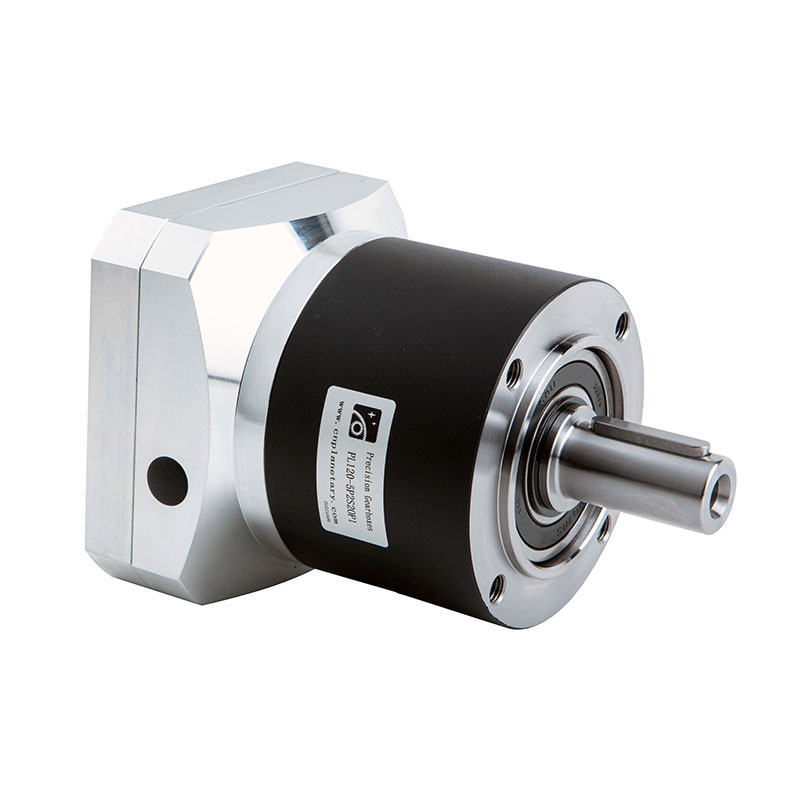
In the realm of mechanical engineering, the planetary gearbox stands as one of the most efficient and reliable components in power transmission systems. From automotive applications to industrial mach...
See Details
With the rapid development of industrial technology, mechanical equipment has become increasingly important in all walks of life and has become a key factor in promoting the improvement of productivit...
See Details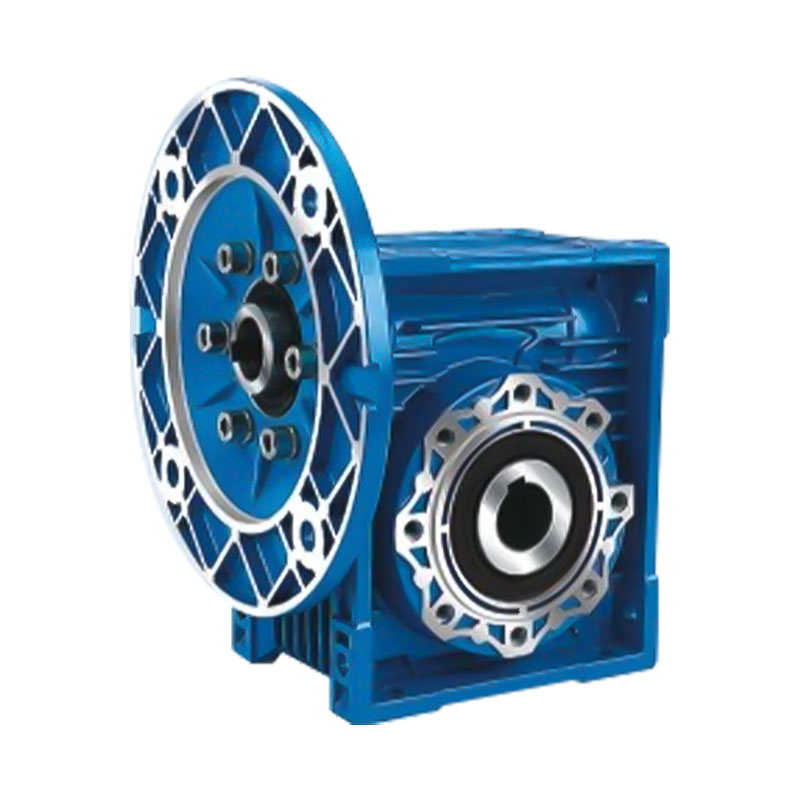
In modern industrial transmission systems, efficient, reliable and compact speed reduction devices are one of the core components that ensure the stable operation of mechanical equipment. With its uni...
See Details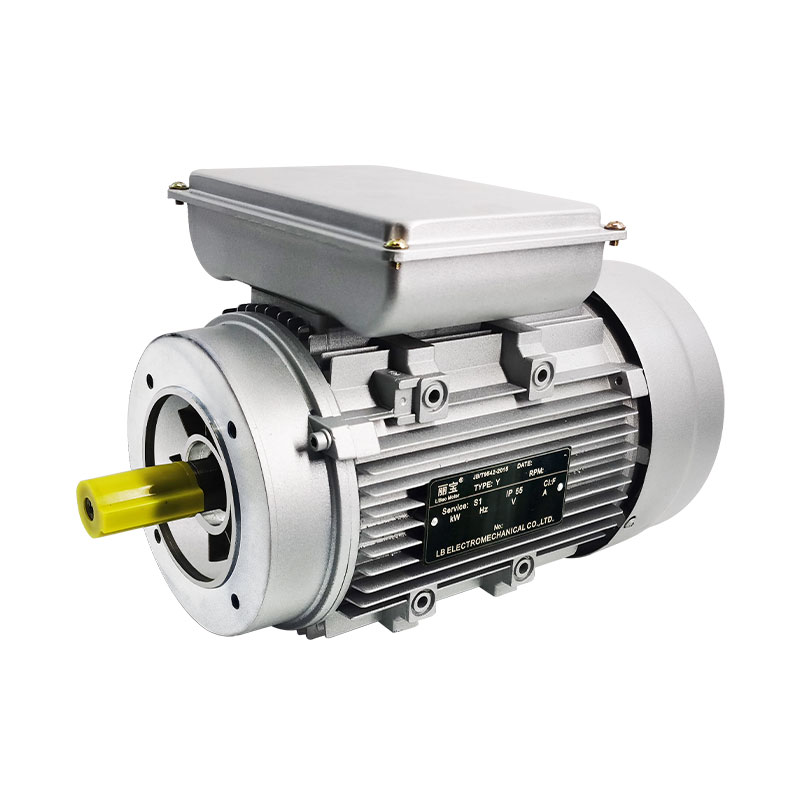
In the huge system of modern electrical equipment, single-phase AC motor is an extremely critical basic component, and its presence is everywhere in all areas of life and production. Whether it is hom...
See DetailsRequest for a call today