English
 中文简体
中文简体 Español
In the realm of mechanical engineering, the planetary gearbox stands as one of the most efficient and reliable components in power transmission systems. From automotive applications to industrial mach...
See Details
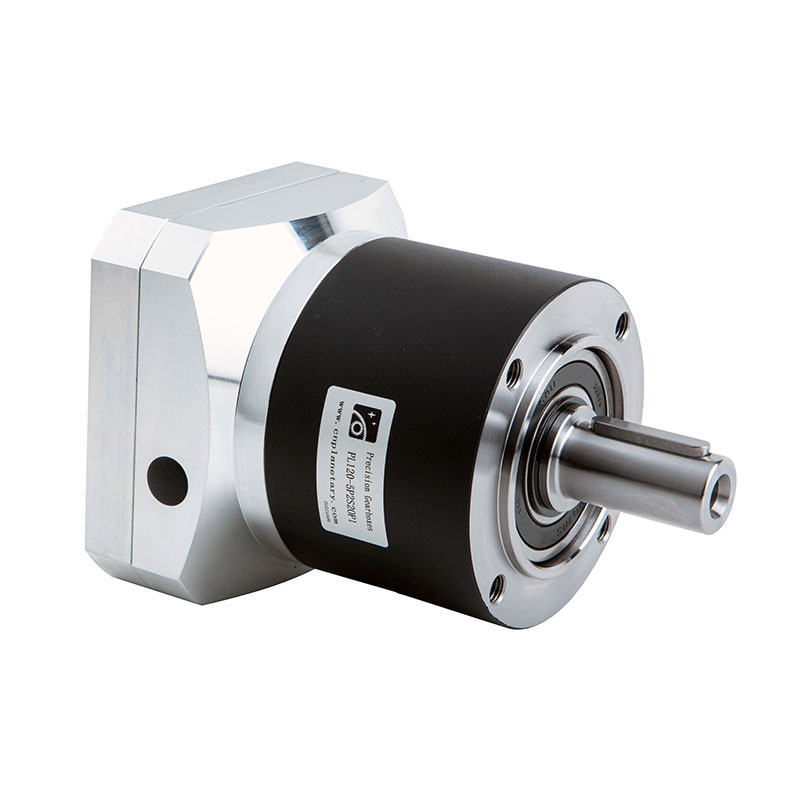
In high-performance motion control, servo systems are the cornerstone of accuracy. Yet even the most sophisticated servo motor cannot achieve micron-level positioning without an optimized mechanical transmission. The PL PF Series Precision Planetary Reducer bridges this gap by converting motor torque into usable work with minimal losses. Unlike conventional gearboxes, a planetary gear reducer distributes load across multiple planet gears, yielding exceptional torsional stiffness and near-zero backlash. For engineers demanding repeatable positioning errors below 1 arc-minute, the synergy between a servo reducer and a high-precision planetary gearbox gear reducer becomes non-negotiable.
Consider a CNC machining center: each axis requires dynamic response and holding torque. A standard helical gearbox introduces 10-15 arcmin of backlash, causing chatter and dimensional drift. By contrast, planetary reducers from the PL PF Series achieve backlash as low as 3 arcmin (standard) or 1 arcmin on request. This directly translates to tighter part tolerances and faster cycle times. The growing adoption of 10 1 gear reducer configurations in pick-and-place robots underscores the demand for compact, high-ratio solutions that maintain stiffness under reversing loads.
The core of any planetary drive mechanism lies in its sun gear, planet carrier, and internal ring gear. The PL PF Series refines this topology with case-hardened and ground gears (58-62 HRC) to resist micro-pitting under cyclic loads. Unlike spur-gear reducers, the inline planetary reducer configuration ensures coaxial input/output shafts, eliminating parasitic bending moments. This coaxiality, combined with a one-piece planet carrier and tapered roller bearings, boosts radial load capacity by up to 30% compared to standard needle-bearing designs.
A low backlash planetary gearbox is defined by angular transmission error under load reversal. The PL PF Series achieves this through pre-loaded, matched gear sets and optimized tooth flank modifications. When paired with a servo gear reducer, the overall system stiffness (Nm/arcmin) improves positioning stability during acceleration/deceleration phases. For a typical 10:1 reduction ratio, the reflected inertia to the motor side is reduced by the square of the ratio, allowing higher loop gains without resonance.
To appreciate the engineering value of the PL PF Series Precision Planetary Reducer, consider a side-by-side comparison with a standard spur gear reducer under identical servo motor (400W, 3000 rpm, 10:1 reduction). Tests conducted on a laser interferometer setup revealed the following:
For applications requiring a reduction ratio 10:1, the PL PF Series delivers 30% higher overload capacity and reduces settling time by approximately 40% in point-to-point moves. These metrics are derived from dynamometer tests and are consistent across frame sizes from 42mm to 220mm.
A 10 1 gear reducer strikes an optimal balance between torque multiplication and output speed. When inertia matching is critical (load inertia / motor inertia ≤ 10), a planetary reducer with a 10:1 ratio reduces the reflected load inertia by a factor of 100 (ratio squared). This allows standard servos to accelerate heavy loads without exceeding peak current limits. Moreover, the servo reducer enhances the system’s mechanical time constant, improving disturbance rejection.
In a high-speed drilling application, the original design used a direct-drive servo but suffered from torque ripple and overheating. By retrofitting an inline planetary reducer with a 10:1 ratio, the torque density increased 8-fold, and the error mapping improved from 35μm to 8μm. The compact planetary gearhead length (only 98mm for 80mm frame) allowed seamless integration into existing gantry systems. This demonstrates how a well-chosen reducer planetary unit can transform system accuracy without a complete redesign.
“Precision is not an add-on — it is engineered into every tooth profile and bearing preload of the PL PF Series. For servo systems, low backlash planetary gearbox technology represents the difference between theoretical positioning and real-world micron accuracy.”
While the PL PF Series Precision Planetary Reducer is designed for drop-in compatibility, achieving rated performance requires attention to:
Using a flexible coupling (not included) compensates for minor angular errors but should not exceed 0.5° deflection. For critical applications, laser alignment is recommended. The reducer's housing, made from high-strength aluminum alloy (anodized), provides corrosion resistance and efficient heat dissipation.
Adopting a high-quality planetary gear reducer like the PL PF Series reduces total cost of ownership through:
Additionally, the compact planetary gearhead design provides high torque density, allowing downsizing of the servo motor in some cases. For example, a 750W servo with a PL PF reducer (10:1) can replace a 1.5kW direct-drive solution, cutting energy consumption by 30% while improving accuracy due to reduced cogging effects.
A1: A planetary reducer distributes torque over multiple planet gears, offering higher stiffness, lower backlash, and better weight-to-torque ratio. Standard helical gearboxes are more prone to backlash (10–20 arcmin) and lack the coaxial compactness needed for precision servo systems.
A2: Yes. The PL PF Series Precision Planetary Reducer is designed with modular input adapters to fit most global servo motor brands. The provided installation kit ensures concentric pilot fits for zero misalignment.
A3: With a 10 1 gear reducer, the encoder's angular resolution is multiplied by 10 at the output shaft. For a 20-bit absolute encoder, the mechanical resolution becomes 0.00034 degrees per pulse, far beyond what most machine axes require. This ratio also reduces reflected inertia, improving loop stability.
A4: The PL PF Series is permanently lubricated and sealed. No routine grease changes are needed under normal conditions (ambient -20°C to +80°C). Annual inspection of sealing rings and bolt torque is recommended for high-cycle applications (>1 million cycles/year).
A5: Absolutely. The planetary drive mechanism with angular contact bearings supports frequent direction changes. The low backlash planetary gearbox design ensures minimal lost motion, essential for robotic path accuracy and backdrivability in collaborative setups.
In the realm of mechanical engineering, the planetary gearbox stands as one of the most efficient and reliable components in power transmission systems. From automotive applications to industrial mach...
See Details
With the rapid development of industrial technology, mechanical equipment has become increasingly important in all walks of life and has become a key factor in promoting the improvement of productivit...
See Details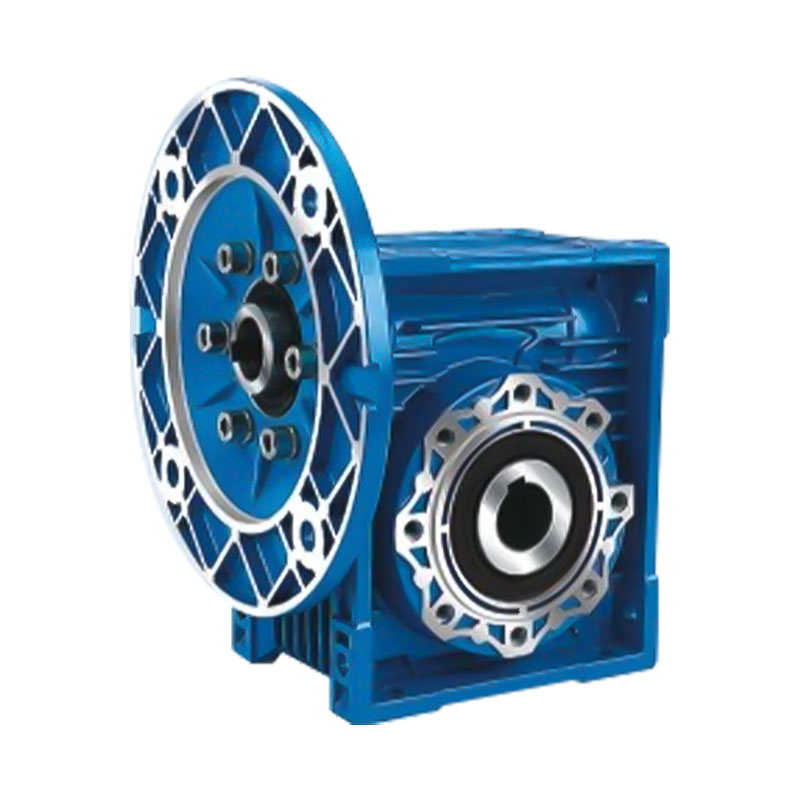
In modern industrial transmission systems, efficient, reliable and compact speed reduction devices are one of the core components that ensure the stable operation of mechanical equipment. With its uni...
See Details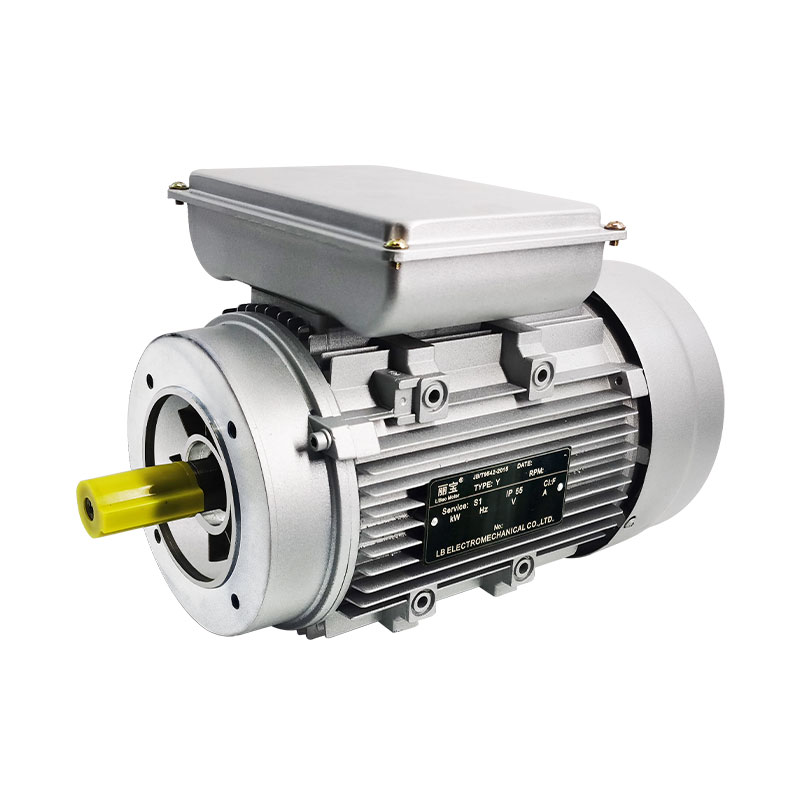
In the huge system of modern electrical equipment, single-phase AC motor is an extremely critical basic component, and its presence is everywhere in all areas of life and production. Whether it is hom...
See DetailsRequest for a call today