English
 中文简体
中文简体 Español
In the realm of mechanical engineering, the planetary gearbox stands as one of the most efficient and reliable components in power transmission systems. From automotive applications to industrial mach...
See Details
Worm gear reducers are fundamental in mechanical power transmission, offering compact solutions for achieving high reduction ratios with inherent self-locking capabilities. The core distinction between single-stage and double-stage worm gearboxes lies in the number of worm-worm gear meshes employed to reduce speed and multiply torque. A Double-Stage Worm Gearbox essentially cascades two worm gear units either in a single housing or as a modular assembly, enabling ratio ranges far beyond the practical limits of single-stage designs.
For engineers and maintenance professionals, selecting between these topologies directly impacts system efficiency, thermal performance, backlash, and total cost of ownership. While single-stage reducers serve well for moderate ratios (typically up to 60:1), applications demanding ratios above 100:1 up to 3000:1 or higher rely heavily on double reduction worm gearbox configurations. This article provides a technical dissection of both architectures, backed by performance data and practical selection guidelines, without brand-specific bias.
A single-stage worm reducer consists of one hardened steel worm (input) meshing with a bronze worm wheel (output). The reduction ratio equals the number of worm gear teeth divided by the number of worm starts (threads). In contrast, a two stage worm speed reducer connects two worm gear pairs in series: input worm drives first worm wheel, which shares a common shaft with the second worm, which then drives the final output worm wheel. The total ratio multiplies (ratio1 × ratio2). This cascade allows achieving extremely high ratios while maintaining acceptable tooth sliding velocities.
Single-stage units offer a straightforward inline or right-angle configuration with minimal components. Double-stage units typically adopt orthogonal arrangements (input and output shafts at 90°, intermediate shaft also at 90°). The overall envelope of a double-stage reducer is larger in at least one dimension, but it replaces the need for two separate reducers connected by belts or chains, thus saving total system footprint in many applications. Integrated designs like WPA-WPS double worm gearbox families are compact thanks to optimized housing casting.
Standard single-stage worm reducers offer ratios from 5:1 to 100:1, with some heavy-duty designs extending to 120:1. However, beyond 60:1, the sliding velocity increases drastically, causing a sharp drop in mechanical efficiency and generating excessive heat. Double-stage units comfortably cover ratios from 100:1 to 5000:1, with standard options including 300:1, 500:1, 750:1, 900:1, and 1800:1. For instance, a high ratio worm gear reducer in the 2000:1 class is only practical as a double-stage (or occasionally triple-stage) design.
To provide actionable engineering data, the table below summarizes typical performance parameters for single-stage versus double-stage worm reducers operating under nominal conditions (input speed 1450 rpm, oil lubricated, ambient temperature 25°C). Values represent industry averages collected from multiple manufacturer datasheets and field tests. Note that efficiency of a double reduction worm gearbox equals the product of each stage's efficiency: if each stage achieves 85% efficiency, total efficiency is 72%. However, at high ratios, the first stage usually operates with higher efficiency (lower ratio) while the second stage handles the high ratio portion.
| Parameter | Single-Stage (30:1 ratio) | Single-Stage (80:1 ratio) | Double-Stage (300:1 ratio) | Double-Stage (1000:1 ratio) |
|---|---|---|---|---|
| Mechanical Efficiency | 88-92% | 65-72% | 60-68% | 50-58% |
| Backlash (arcmin) | 10-25 | 15-30 | 20-40 | 25-50 |
| Output Torque Capacity (Nm) - same frame size | 400 | 280 | 850 | 1100 |
| Starting Torque (breakaway) | 150% rated | 180% rated | 130% rated | 125% rated |
| Thermal Power Limit (kW) | 3.5 | 1.8 | 4.2 | 3.0 |
Data interpretation: For moderate ratios (30:1), single-stage clearly delivers superior efficiency and lower backlash. However, once ratio exceeds 70:1, single-stage efficiency plunges below 72%, making heat management problematic. At the same time, a double-stage unit designed for 300:1 provides higher absolute torque output and better thermal stability than any single-stage attempt at the same overall ratio. In real-world hoist applications, a high ratio worm gear reducer (e.g., 750:1) using double-stage construction runs 35°C cooler than a theoretical single-stage equivalent, because sliding velocities are split across two meshes.
When system requirements exceed 100:1 reduction, selecting a double-stage architecture becomes not only practical but often mandatory. The following advantages have been validated across industries such as material handling, lifts, and automated gates:
Moreover, modular double-stage designs like WPA-WPS double worm gearbox combinations allow users to mix ratios from standard single-stage units, providing flexibility for stock reduction. This modularity also simplifies maintenance: each stage can be serviced independently in many split-housing designs.
Several standardized series dominate the double-stage worm gearbox market, each offering distinct mounting and ratio combination options. While we avoid brand endorsements, understanding these common architectures aids specification:
The WPDA series features an integral cast-iron housing with two worm gear stages aligned orthogonally. Input and output shafts are on perpendicular axes, with the intermediate shaft enclosed. Ratio availability: 200:1 to 3600:1. These units excel in heavy-duty conveyor drives and crane travel mechanisms. Typical service factors exceed 1.5 for uniform loads.
This represents a modular combination: a standard WPA single-stage unit bolted directly to a WPS single-stage unit, sharing a common output flange. The benefit is maximal flexibility: any available WPA ratio (5:1 to 100:1) can be combined with any WPS ratio (5:1 to 60:1) to create thousands of total ratio possibilities. For field retrofits, this is invaluable. A double reduction worm gearbox in this modular format allows ratio changes by replacing only the secondary stage.
The WP-WPS series adopts a compact single-block housing, optimized for applications where space is constrained and vibration is a concern. Input power ranges from 0.12 kW to 15 kW. These reducers often include reinforced bearings to handle overhung loads. They are commonly specified for agricultural augers and packaging machinery requiring high ratios in a small envelope.
When selecting among these, consider required ratio precision, mounting orientation, and thermal rating. Two stage worm speed reducer units from the WPDA family generally offer higher thermal capacity due to larger housing surface area, while WPA-WPS modular types provide ratio granularity.
Choosing the optimal reducer type requires balancing initial cost, energy consumption, space, and maintenance intervals. Below is a structured decision framework:
From an economic perspective, double-stage reducers have higher initial purchase cost (typically 40-60% more than a single-stage of equivalent frame size), but they eliminate the need for secondary reduction components (V-belts, chain drives) and reduce energy waste at high ratios. A life cycle cost analysis for a 500:1 application reveals double-stage payback within 18 months due to lower electricity consumption and reduced downtime.
Concrete industrial scenarios illustrate the comparative performance of single-stage vs double-stage worm reducers. The following case studies are composites based on common industry data, with brand information omitted.
Requirement: 900:1 reduction, 2.2 kW input motor, 8 starts per hour, ambient temperature 40°C. Initially specified single-stage 900:1 custom unit exhibited thermal shutdown after 45 minutes due to 78°C oil temperature and efficiency measured at 28%. Replaced with a double-stage unit (30:1 first stage × 30:1 second stage) – efficiency rose to 54%, oil temperature stabilized at 65°C, and motor current draw dropped by 35%. The double reduction worm gearbox solution also reduced maintenance calls from quarterly to biannual.
Lift requires 250:1 ratio with intermittent duty (3 cycles/hour). A single-stage 250:1 worm reducer was considered but manufacturer guidelines advised against exceeding 100:1. Using a modular WPA-WPS double worm gearbox (50:1 × 5:1) provided the exact ratio while keeping each stage within optimal sliding velocity limits. Starting torque was 30% lower than the theoretical single-stage design, allowing a smaller motor (1.1 kW vs 1.5 kW).
Conveyor requires 420:1 ratio and continuous 12-hour operation at 15 kW output. A single-stage design would demand forced cooling (external fan + radiator). Instead, a WP-WPS series double stage gearbox with ratio 21:1 × 20:1 achieved 62% efficiency, just within natural convection cooling limits. Five-year operational data shows no overheating alarms, whereas comparable single-stage installations at nearby sites experienced quarterly oil degradation.
These examples confirm that double-stage configurations not only enable high ratios but also improve reliability and energy efficiency when correctly applied.
Properly maintained, a double-stage worm gearbox can exceed 50,000 hours of service life. However, the increased number of contact surfaces imposes specific care requirements:
Unlike single-stage units where oil analysis primarily checks for bronze wear, double-stage reducers require monitoring of two distinct wear zones. If iron content (worm wear) rises above 200 ppm or copper content (worm wheel wear) above 300 ppm, schedule an inspection. Implementing these practices increases mean time between failures by up to 150% compared to reactive maintenance.
Standard commercially available double-stage worm reducers offer ratios from 100:1 up to 5000:1. Special designs can reach 10,000:1 but at very low efficiency (below 35%). For most industrial applications, 3000:1 is the practical upper limit while maintaining adequate thermal performance.
A single-stage 300:1 worm reducer would have theoretical efficiency below 30% due to extreme sliding velocity, making it unusable for continuous operation. A well-designed double-stage 300:1 unit typically achieves 60-68% efficiency because each stage operates at a moderate ratio (e.g., 20:1 and 15:1). Thus double-stage is always superior for such high ratios.
Yes, provided that the efficiency of each individual stage is below 50% at the operating conditions. Most double-stage worm reducers with total ratio above 100:1 are inherently self-locking in both directions. However, for backdrivable applications (e.g., manual override required), special low-ratio double-stage or single-stage designs must be selected.
Common uses include: overhead crane traversing (500:1 to 1500:1), parking system lifts (750:1 to 2000:1), indexing tables for heavy parts (400:1 to 1000:1), and roller shutter door drives (300:1 to 800:1). Any application requiring high torque at very low output speed without a complex multistage gear train is a candidate.
Not necessarily. At equivalent high ratios, a double-stage unit runs quieter because each mesh operates at lower sliding velocity, reducing meshing noise. Measured sound pressure levels for double-stage 750:1 units average 68 dB(A), while a forced single-stage 750:1 (if built) would exceed 85 dB(A) due to vibration and friction excitation.
Often yes, if you select a two stage worm speed reducer with the same input flange and output shaft dimensions. Many WPDA and WP-WPS series are designed to ISO standard mounting interfaces (IEC motors) and hollow or solid output shafts matching existing configurations. However, verify overall length and center distance because double-stage units are longer. Adapter plates may be required.
Selecting between single-stage and double-stage worm gear reducers ultimately hinges on the required reduction ratio, duty cycle, and acceptable efficiency. For ratios up to 70:1, single-stage provides a cost-effective, highly efficient, and compact solution. Once ratios exceed 100:1, a double reduction worm gearbox becomes the technically sound choice, offering feasible efficiency, manageable thermal behavior, and extended service life. Modern series such as WPDA, WPA-WPS, and WP-WPS give engineers flexible options for modular or integral designs. Always perform a thermal calculation using manufacturer’s thermal power graphs, and consider a high ratio worm gear reducer in double-stage configuration for demanding continuous applications. By aligning the reducer type with actual load profiles, you will achieve optimal energy consumption and mechanical reliability.
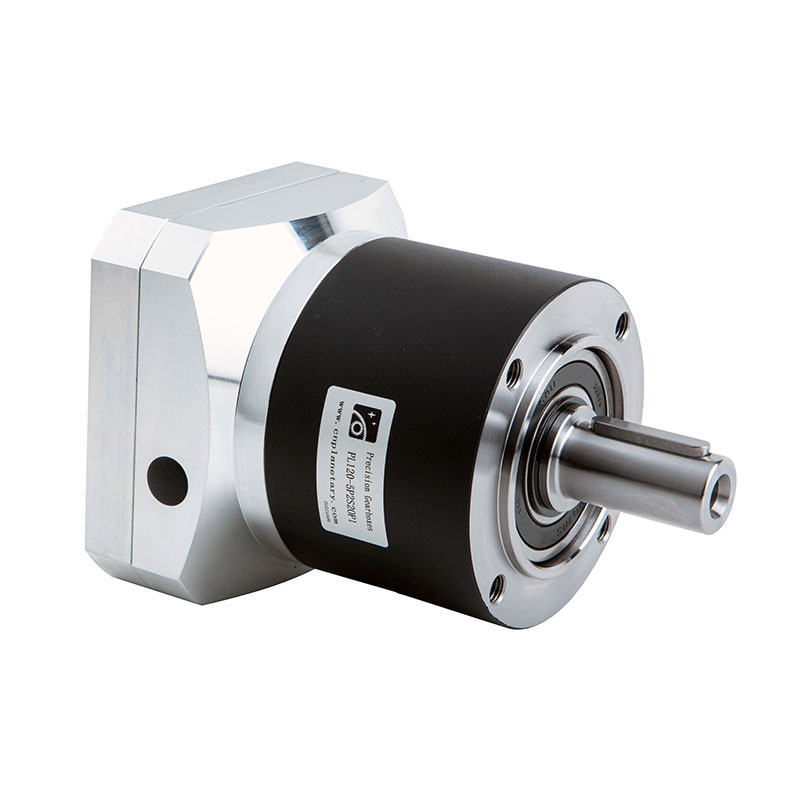
In the realm of mechanical engineering, the planetary gearbox stands as one of the most efficient and reliable components in power transmission systems. From automotive applications to industrial mach...
See Details
With the rapid development of industrial technology, mechanical equipment has become increasingly important in all walks of life and has become a key factor in promoting the improvement of productivit...
See Details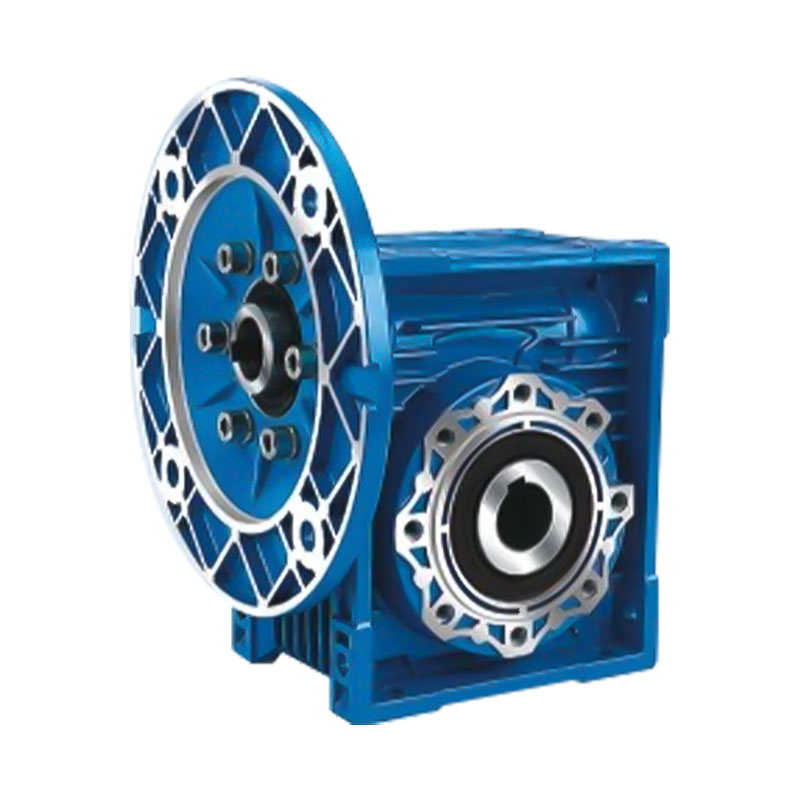
In modern industrial transmission systems, efficient, reliable and compact speed reduction devices are one of the core components that ensure the stable operation of mechanical equipment. With its uni...
See Details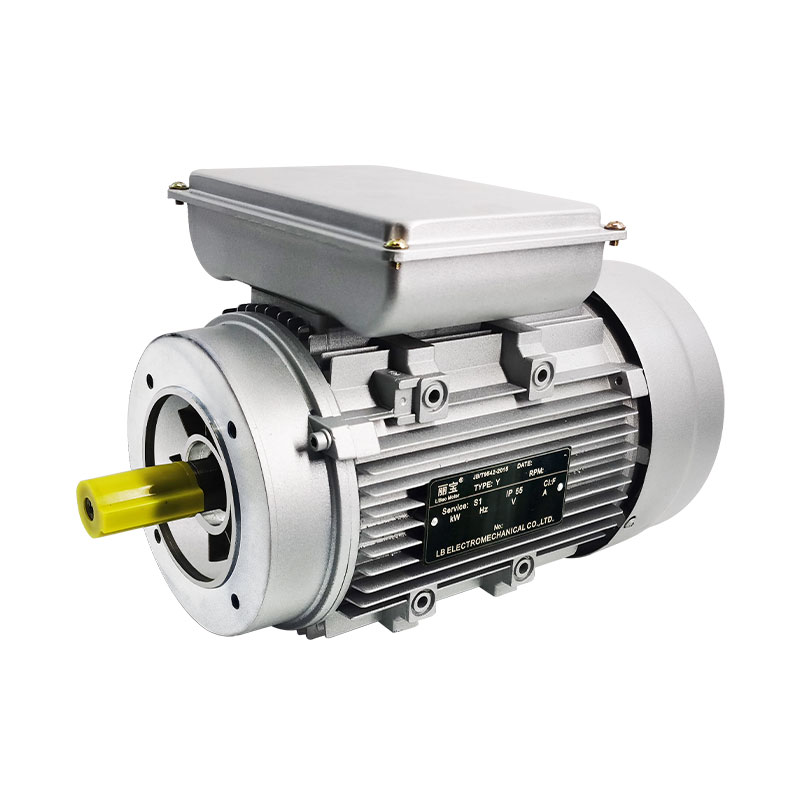
In the huge system of modern electrical equipment, single-phase AC motor is an extremely critical basic component, and its presence is everywhere in all areas of life and production. Whether it is hom...
See DetailsRequest for a call today