English
 中文简体
中文简体 Español
In the realm of mechanical engineering, the planetary gearbox stands as one of the most efficient and reliable components in power transmission systems. From automotive applications to industrial mach...
See Details
Before diving into advantages, it is important to understand the core mechanical difference between these two gear types. A straight-cut spur gear has teeth cut parallel to the gear's axis of rotation, meaning the entire tooth width engages and disengages simultaneously during each mesh cycle. This abrupt engagement is the root cause of many performance limitations.
Helical gears, by contrast, have teeth cut at an angle — typically between 15 and 30 degrees — relative to the gear axis. This helix angle means that tooth contact begins at one edge and gradually sweeps across the full face width as the gears rotate. The result is a progressive, overlapping engagement that fundamentally changes how force, vibration, and heat are managed throughout the drivetrain.
The R series helical gear motor applies this helical tooth geometry across multiple reduction stages arranged in an inline (coaxial) configuration. Understanding this geometry is the key to appreciating every advantage discussed below.
One of the most commercially significant advantages of the R series helical gear motor over spur gears is its superior transmission efficiency. Because helical teeth engage gradually and maintain contact across a larger surface area at any given moment, friction losses are distributed and reduced compared to the sudden, full-width impact of spur gear meshing.
In practical terms:
For continuous-duty industrial applications — conveyors, mixers, agitators, and extruders running 16 to 24 hours per day — this efficiency gap directly reduces electricity consumption and operating costs. A facility running 50 kW of gear motor load continuously for a year could realistically save thousands of kilowatt-hours annually simply by choosing helical over spur geometry.
The efficiency advantage is also more consistent across varying load conditions. Spur gears tend to show steeper efficiency drops under partial-load or high-speed conditions because the abrupt tooth engagement generates proportionally more noise and friction energy at those operating points. Helical gears maintain their efficiency profile more reliably across the load spectrum.
Noise and vibration are not just comfort issues — in industrial environments they represent energy waste, accelerated bearing wear, structural fatigue, and in precision applications, product quality degradation. This is one of the clearest areas where the R series helical gear motor demonstrates a decisive advantage.
The simultaneous full-tooth engagement of spur gears creates a sharp impact force every time a new pair of teeth comes into mesh. This generates a characteristic high-frequency gear-mesh noise, often described as a whine or rattle, with amplitude proportional to pitch-line velocity and transmitted torque. At speeds above 1000 RPM, spur gear noise in an unenclosed environment can exceed 80 to 90 dB(A) depending on quality and load.
The angled tooth engagement of helical gears means that contact initiates at a single point and rolls progressively across the tooth face. This rolling action, combined with the fact that multiple teeth are always in simultaneous contact (expressed as a contact ratio greater than 1.0 — typically 1.4 to 2.0 for helical gears versus 1.2 to 1.6 for spur gears), creates a smoother, more continuous force transmission with dramatically lower impact impulses.
The practical result is that R series helical gear motors routinely operate at noise levels 10 to 15 dB(A) lower than equivalent spur gear reducers at the same power and speed rating. In a workshop or food processing facility where noise limits are enforced, this difference can determine whether a drive system is compliant with occupational health regulations.
Reduced vibration is not merely acoustic — it directly extends the service life of connected components. Spur gear vibration transmits shock loads into motor bearings, output shaft bearings, couplings, and even the driven machine frame. Over months of continuous operation, these repeated micro-impacts cause fretting corrosion in bearing races, fatigue cracking in housings, and loosening of fasteners. The smoother torque delivery of helical gear stages reduces all of these secondary failure modes.
The ability to transmit more torque without increasing gearbox size is a critical advantage for machine designers working with tight installation spaces. R series helical gear motors excel in this area due to the geometric properties of helical tooth engagement.
Because helical gears maintain a higher contact ratio — meaning more teeth are sharing the transmitted load at any instant — the peak stress on any individual tooth is substantially lower than in a spur gear transmitting the same torque. This has two practical consequences:
The helical tooth form also benefits from a higher form factor in bending calculations. The oblique contact line means that the effective face width resisting bending is larger than the actual gear face width, further increasing the bending strength compared to spur gears of identical dimensions.
This combination of surface fatigue resistance and bending strength makes the R series helical gear motor capable of handling high cyclic loads, shock loads, and overloads that would cause premature pitting or tooth fracture in a spur gear reducer of similar size. Industries such as aggregate processing, heavy material handling, and steel rolling commonly exploit this advantage to avoid upsizing the gearbox frame.
The R series designation refers specifically to the inline (coaxial) arrangement of the helical gear stages. Input and output shafts share the same axis of rotation, which offers major installation advantages over angular or offset gear arrangements. The compact inline configuration, combined with multi-stage helical reduction, enables the R series to achieve high single-unit reduction ratios while maintaining a small footprint.
| Parameter | Spur Gear Reducer (Typical) | R Series Helical Gear Motor |
| Single-unit ratio range | Up to 1:30 (2 stages) | Up to 1:200 (3 stages) |
| Noise level at 1450 RPM input | 78 - 92 dB(A) | 65 - 78 dB(A) |
| Stage efficiency | 94% - 96% | 97% - 99% |
| Relative torque density | Baseline | 20% - 35% higher |
| Shaft arrangement | Parallel or inline | Inline (coaxial) |
| Typical application speed | Low to medium | Low to high |
The coaxial shaft layout of R series units simplifies machine design by eliminating the need to accommodate shaft offset or angular misalignment between the motor and the driven machine. Direct coupling is straightforward, and the overall drive assembly length is minimized compared to parallel-shaft or bevel-helical alternatives for the same ratio.
In applications such as belt conveyor drives, screw conveyors, and drum drives, the inline configuration allows the gear motor to mount directly on the driven shaft or machine frame without intermediate shafting, reducing both parts count and alignment complexity.
Total cost of ownership for industrial drive equipment includes not just the purchase price but also maintenance labor, spare parts, lubrication costs, and production losses during unplanned downtime. R series helical gear motors offer a favorable profile in all of these areas compared to spur gear reducers.
It is worth acknowledging that helical gears do generate axial (thrust) forces due to the helix angle, which spur gears do not. This is sometimes cited as a disadvantage. However, R series designs address this through the use of appropriately rated taper roller or deep groove ball bearings with defined axial load capacity. When correctly specified, the bearings in an R series unit are designed to handle the inherent thrust loads with adequate safety margins, and their life is calculated accordingly.
The net effect on bearing life is positive compared to spur gear units, because:
Pitting fatigue on gear tooth flanks is one of the primary life-limiting failure modes for any gear reducer. Because helical tooth contact distributes load over a larger area and the contact stress is lower for equivalent torque, the pitting resistance life (surface fatigue life) of helical gears is typically 30% to 50% longer than spur gears of the same material and size under identical duty cycles.
For maintenance teams operating large fleets of gear motors — for example in a bottling plant with 40 to 80 drive units — this extended tooth life translates directly into fewer planned replacement intervals and lower annual spare parts expenditure.
R series helical gear motors are supplied as sealed units, typically with splash lubrication using ISO VG 220 or VG 320 mineral or synthetic oil. This sealed architecture protects internal components from contamination and simplifies site maintenance to periodic oil level checks and scheduled oil changes — typically every 10,000 to 20,000 operating hours depending on ambient temperature and duty. Spur gear boxes in open or semi-open configurations are more susceptible to contamination ingress and require more frequent inspection.
In many industrial processes, the quality of torque delivery from the drivetrain directly affects the end product or process outcome. This is an area where the difference between spur and helical gears is most immediately visible in production results.
Applications where smooth torque delivery is critical include:
The high contact ratio of R series helical stages (typically 1.6 to 2.0) ensures that the instantaneous angular velocity transmission error — the technical measure of speed ripple — is kept extremely low. This characteristic makes R series helical gear motors the preferred choice in these demanding process applications where spur gears would require additional vibration isolation or damping measures to achieve acceptable results.
R series helical gear motors are designed as integrated drive units combining a helical gearbox with a directly flanged IEC or NEMA standard motor. This integration philosophy offers several practical advantages in design and commissioning.
Standard R series units support a wide range of mounting arrangements, including:
This mounting flexibility, combined with the coaxial inline shaft arrangement, makes R series units adaptable to space-constrained installations without requiring custom mechanical interfaces. The motor position can often be rotated in 90-degree increments around the housing to suit cable routing and maintenance access requirements.
Standard R series helical gear motor product lines cover motor power ratings from approximately 0.12 kW to 160 kW and output torque ratings from under 100 Nm to over 18,000 Nm, with available reduction ratios spanning from approximately 1.3:1 to 289:1 in a single housing. This wide coverage means that a single product family can serve an entire plant's drive requirements, simplifying procurement, stocking, and technical support.
To illustrate how the technical advantages of R series helical gear motors translate into real application selection decisions, the following comparison outlines common industrial scenarios:
| Application | Why R Series Helical is Preferred | Key Advantage Utilized |
| Belt conveyor drive | Smooth start, low noise in warehouses | Torque smoothness, noise reduction |
| Screw conveyor / agitator | High ratio in compact inline unit | High reduction ratio, compact design |
| Food and beverage processing | Low noise, hygienic sealed housing | Noise, sealed lubrication |
| Packaging machinery | Precise angular velocity, low vibration | Low transmission error |
| Heavy material handling | High torque density, shock load tolerance | Load capacity advantage |
| Continuous process lines | High efficiency, low running costs | Efficiency, bearing life |
Spur gear reducers retain a legitimate role in applications where simplicity, very low cost, and moderate-speed, low-noise-sensitivity conditions are the primary criteria — for example, simple hand-operated or low-duty-cycle equipment. However, for the vast majority of continuous industrial drive applications, the R series helical gear motor delivers a clearly superior technical and economic case.
When evaluating the R series helical gear motor against straight-cut spur gear reducers across all dimensions of industrial drive performance, the helical design consistently demonstrates measurable advantages:
In many cases, yes. The inline (coaxial) shaft arrangement of R series units is compatible with typical spur gear reducer mounting interfaces. However, shaft dimensions, center heights, and bolt patterns should be verified against the specific replacement unit before installation. Consulting the product dimensional drawing is recommended.
No. R series units are designed with bearings rated for the inherent axial loads generated by the helix angle. When correctly specified and lubricated per the manufacturer's schedule, maintenance requirements are similar to or lower than those for spur gear units, primarily because smoother engagement reduces dynamic stresses on all internal components.
Most R series units use ISO VG 220 mineral oil for standard ambient temperature operation, or ISO VG 220 synthetic oil for high-temperature, low-temperature, or extended oil change interval applications. Always refer to the specific unit's documentation for the correct oil type, grade, and fill quantity.
Yes. R series helical gear motors are commonly paired with VFDs for variable-speed applications. When operating at extended low-speed ranges, forced ventilation for the motor may be required if the standard fan-cooled motor cannot maintain adequate cooling below approximately 25 Hz. Confirm the motor's thermal class and cooling arrangement with the supplier when specifying VFD operation.
Under properly specified, correctly lubricated, and well-maintained conditions, R series helical gear motors are designed for a minimum L10 bearing life of 20,000 hours, with gear tooth surface life exceeding this in most standard industrial duty cycles. Actual service life depends on load factor, ambient conditions, and maintenance compliance.
R series units support multiple mounting positions including horizontal, vertical shaft-up, and vertical shaft-down, provided the oil fill level is adjusted for the installed orientation. Mounting position must be specified or confirmed when ordering, as some positions may require oil quantity adjustment or breather relocation.
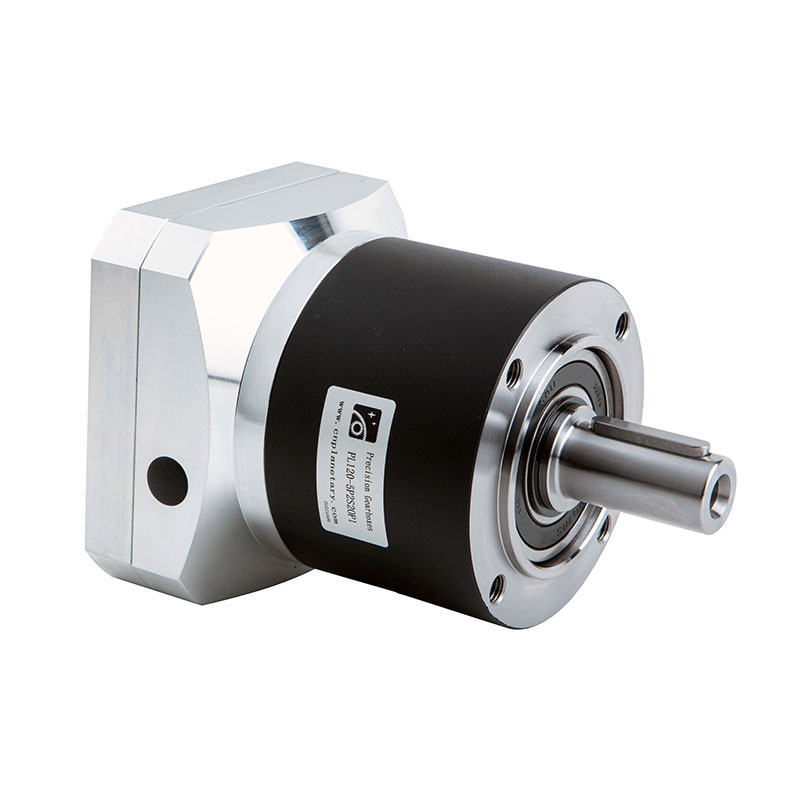
In the realm of mechanical engineering, the planetary gearbox stands as one of the most efficient and reliable components in power transmission systems. From automotive applications to industrial mach...
See Details
With the rapid development of industrial technology, mechanical equipment has become increasingly important in all walks of life and has become a key factor in promoting the improvement of productivit...
See Details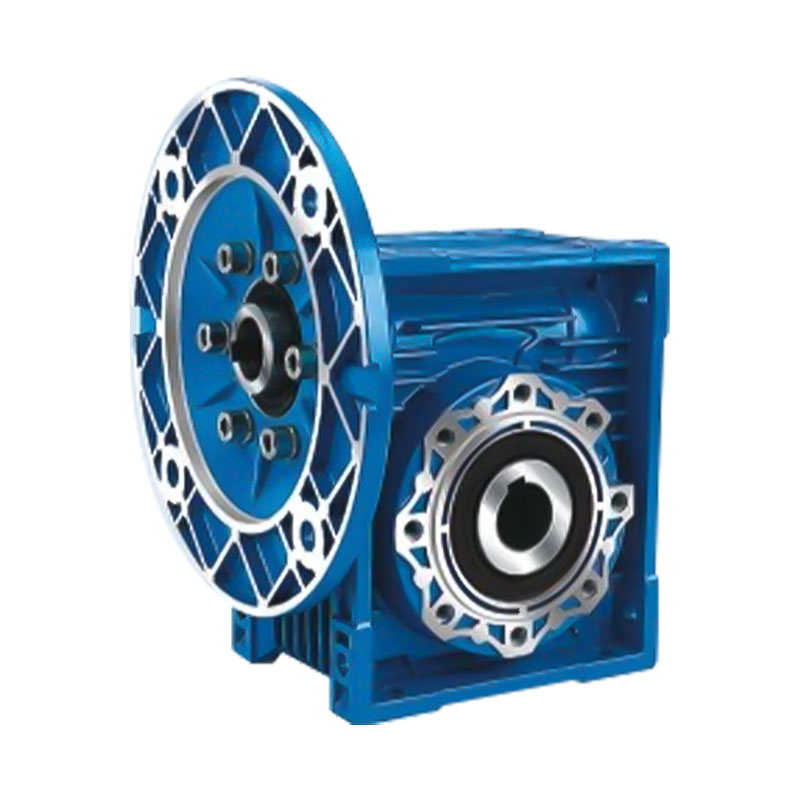
In modern industrial transmission systems, efficient, reliable and compact speed reduction devices are one of the core components that ensure the stable operation of mechanical equipment. With its uni...
See Details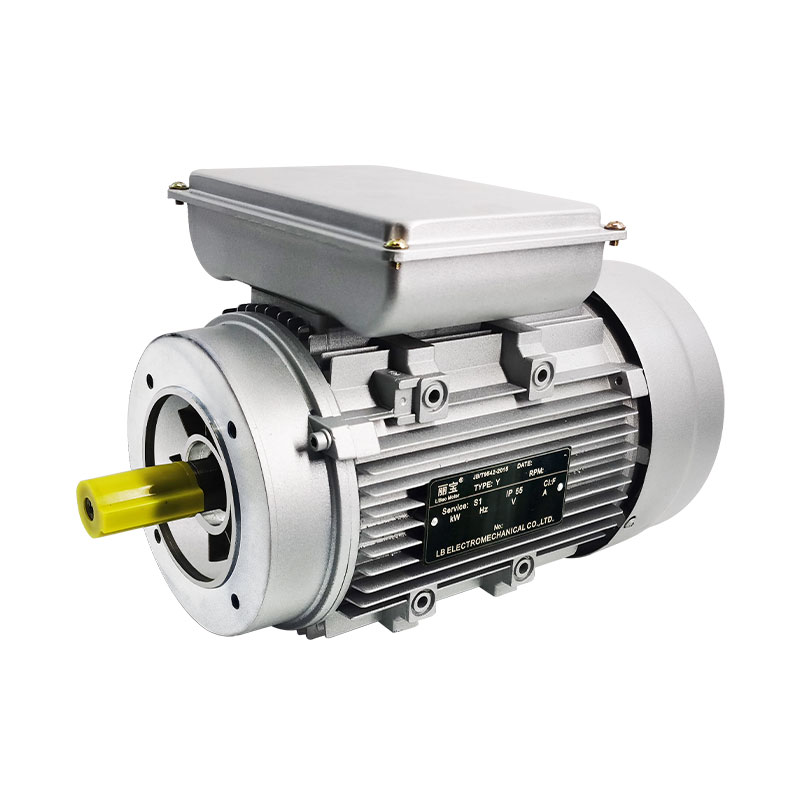
In the huge system of modern electrical equipment, single-phase AC motor is an extremely critical basic component, and its presence is everywhere in all areas of life and production. Whether it is hom...
See DetailsRequest for a call today