English
 中文简体
中文简体 Español
In the realm of mechanical engineering, the planetary gearbox stands as one of the most efficient and reliable components in power transmission systems. From automotive applications to industrial mach...
See Details
NMRV worm gear speed reducers and RV reducers are fundamentally different in structure, precision, load capacity, and application domain. The NMRV reducer is a compact, cost-effective solution widely used in light-to-medium duty industrial automation, while the RV reducer is a high-precision, high-rigidity unit engineered specifically for demanding robotics and servo systems. Choosing between them is not simply a matter of preference — it depends on torque requirements, positioning accuracy, backlash tolerance, and budget.
In short: if your application requires general-purpose speed reduction at an economical cost, the NMRV worm gear speed reducer is a proven choice. If your system demands sub-arcminute backlash and high cyclical load performance, an RV reducer is the appropriate solution.
The most fundamental difference lies in the internal mechanism each reducer uses to achieve speed reduction.
The NMRV reducer uses a worm and worm wheel (helical gear) mechanism. A worm shaft meshes with a worm wheel at a 90-degree angle, producing a compact right-angle drive. The housing is typically made from die-cast aluminum alloy, and the worm is hardened steel. This design allows for gear ratios from 5:1 to 100:1 in a single stage, and up to 3,600:1 with combined units.
RV reducers use a two-stage transmission: an involute planetary gear stage combined with a cycloidal pin-wheel stage. The cycloid disc engages with pins mounted on the output housing, achieving very high gear ratios (typically 57:1 to 192:1) with extremely low backlash. The structure is inherently more complex and manufactured to tight tolerances.
For applications requiring accurate positioning — such as robotic arms, CNC rotary tables, or servo-driven axes — backlash is a decisive parameter.
| Parameter | NMRV Worm Gear Speed Reducer | RV Reducer |
| Typical Backlash | 20 – 60 arcminutes | < 1 arcminute |
| Positioning Repeatability | Moderate (±0.1° typical) | High (±0.01° or better) |
| Transmission Efficiency | 70% – 92% (ratio-dependent) | 85% – 95% |
| Torsional Rigidity | Low to medium | Very high |
The worm gear design inherently produces more backlash due to sliding contact between the worm and wheel. This is acceptable in conveyor systems, agitators, or packaging lines where exact positioning is not critical. However, in a 6-axis industrial robot where joint accuracy directly affects end-effector precision, even 5 arcminutes of backlash can translate to millimeters of positional error at the tool tip.
Both reducer types can handle significant torque, but their load profiles differ considerably.
NMRV reducers are typically rated from 4 Nm to over 2,000 Nm output torque, depending on frame size (NMRV025 to NMRV150). Their load capacity is well-suited to steady-state or low-dynamic-load applications. However, the sliding contact in worm gearing generates more heat under continuous high-load operation, which limits thermal capacity — particularly at higher gear ratios where efficiency drops.
RV reducers are designed for high dynamic loads with frequent start-stop cycles, as seen in robotic joints. They offer rated output torque from approximately 40 Nm to over 8,000 Nm and are specifically rated for moment load (combined radial, axial, and bending loads) — a critical requirement for robot arm joints that must resist cantilevered payloads.
Key distinction: NMRV reducers handle steady torque efficiently; RV reducers excel under dynamic, cyclically reversing loads without degradation over time.
The compact envelope of the NMRV series is one of its most commercially valuable attributes. Available in frame sizes from 25mm to 150mm center distance, these reducers can be mounted in four output shaft configurations: solid shaft, hollow shaft, flange output, or face mount. This flexibility makes them easy to integrate into machines with limited space.
RV reducers, by contrast, are bulkier and heavier for equivalent power ratings. Their form factor is optimized for robotic joint integration — typically a hollow-shaft, flange-mount design — rather than general-purpose machine mounting. Installation requires more precise alignment and is typically bolted directly to a servo motor with a coupling.
Understanding where each reducer performs best helps engineers make the right selection without over-engineering or under-specifying.
Cost is frequently a deciding factor in industrial procurement, and the price difference between NMRV and RV reducers is substantial.
An NMRV worm gear speed reducer in the NMRV050 frame size (a commonly used mid-range unit) typically costs between $20 and $80 USD depending on ratio, output configuration, and supplier. A comparable RV reducer for a robot joint application — even at the lower torque ratings — can cost $300 to $1,500 USD or more, reflecting the precision manufacturing, tight tolerances, and complex internal geometry required.
For high-volume general industrial use, the economics clearly favor the NMRV design. For precision robotics where accuracy directly affects product quality or cycle efficiency, the higher cost of the RV reducer is justified by performance.
Both reducer types are designed for long service life when properly lubricated and operated within rated conditions.
NMRV reducers use synthetic or mineral oil lubrication (factory-filled or user-filled depending on mounting position). Oil changes are recommended every 10,000–15,000 operating hours or annually under heavy-duty conditions. The worm wheel is typically bronze, which wears gradually under sustained high loads — making overloading the primary cause of premature failure.
RV reducers use grease lubrication and are generally sealed units with longer lubrication intervals. Their cycloidal mechanism distributes load across multiple contact points simultaneously, which significantly reduces wear per contact point compared to worm gear sliding contact. This results in longer service life under cyclical high-load conditions — a key reason robotic manufacturers prefer them for joint drives.
| Feature | NMRV Worm Gear Speed Reducer | RV Reducer |
| Mechanism | Worm + worm wheel | Planetary + cycloidal |
| Backlash | 20–60 arcminutes | <1 arcminute |
| Gear Ratio (single stage) | 5:1 – 100:1 | 57:1 – 192:1 |
| Output Torque Range | 4 – 2,000+ Nm | 40 – 8,000+ Nm |
| Efficiency | 70–92% | 85–95% |
| Self-locking | Yes (high ratios) | No |
| Housing Material | Aluminum alloy | Steel |
| Typical Application | General industrial machinery | Robotics, precision servo |
| Relative Cost | Low | High |
Generally no. RV reducers provide backlash below 1 arcminute and high torsional rigidity required for accurate robot joint control. NMRV reducers have significantly higher backlash (20–60 arcminutes) and are not designed for the cyclical dynamic loads of robotic joints.
NMRV refers to a standardized series designation for aluminum-housing worm gear reducers. "N" denotes the housing series, "M" refers to the motor flange compatibility, "RV" indicates the right-angle worm gear configuration.
Yes, at gear ratios above approximately 30:1, the worm gear mechanism becomes self-locking — meaning the output shaft cannot back-drive the input. This is useful in lifting or valve applications where load holding is required without a brake.
Synthetic gear oil (ISO VG 220 or equivalent) is commonly used. The fill quantity and position depend on mounting orientation. Oil replacement is recommended every 10,000–15,000 hours under normal operating conditions.
Yes, NMRV reducers can be paired with servo motors using an input flange adapter. However, for high-precision servo positioning applications requiring low backlash, a helical or planetary reducer is generally more appropriate than the NMRV worm gear type.
RV reducers combine very low backlash (<1 arcminute), high torsional rigidity, and excellent resistance to moment loads — making them the preferred choice for robotic arm joints where all three factors are simultaneously critical.
Standard NMRV reducers use aluminum alloy housings. Some manufacturers offer stainless steel or food-grade variants for hygienic environments, but these are non-standard configurations that require specific ordering.
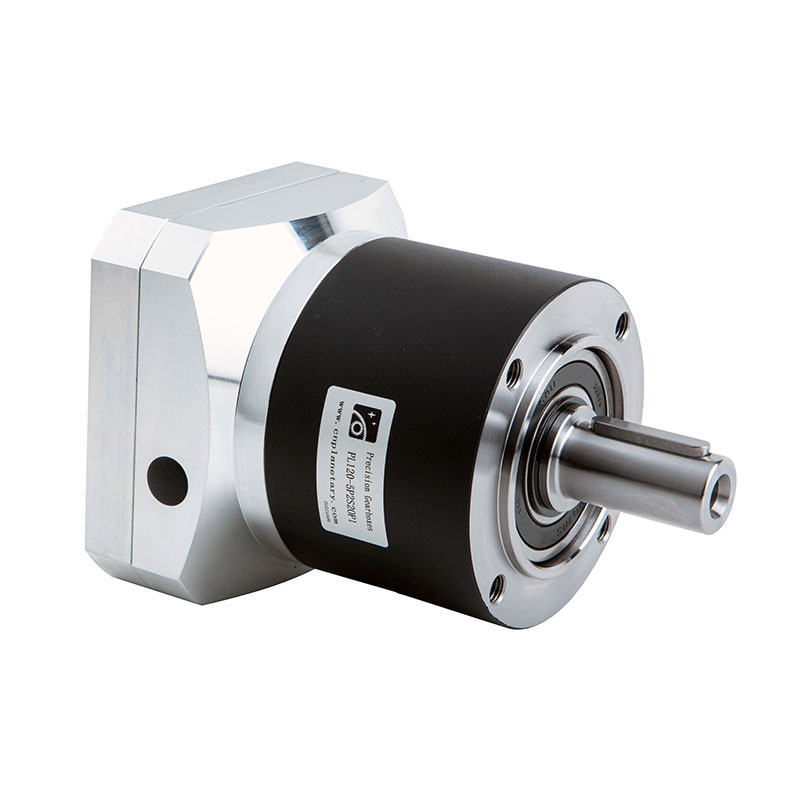
In the realm of mechanical engineering, the planetary gearbox stands as one of the most efficient and reliable components in power transmission systems. From automotive applications to industrial mach...
See Details
With the rapid development of industrial technology, mechanical equipment has become increasingly important in all walks of life and has become a key factor in promoting the improvement of productivit...
See Details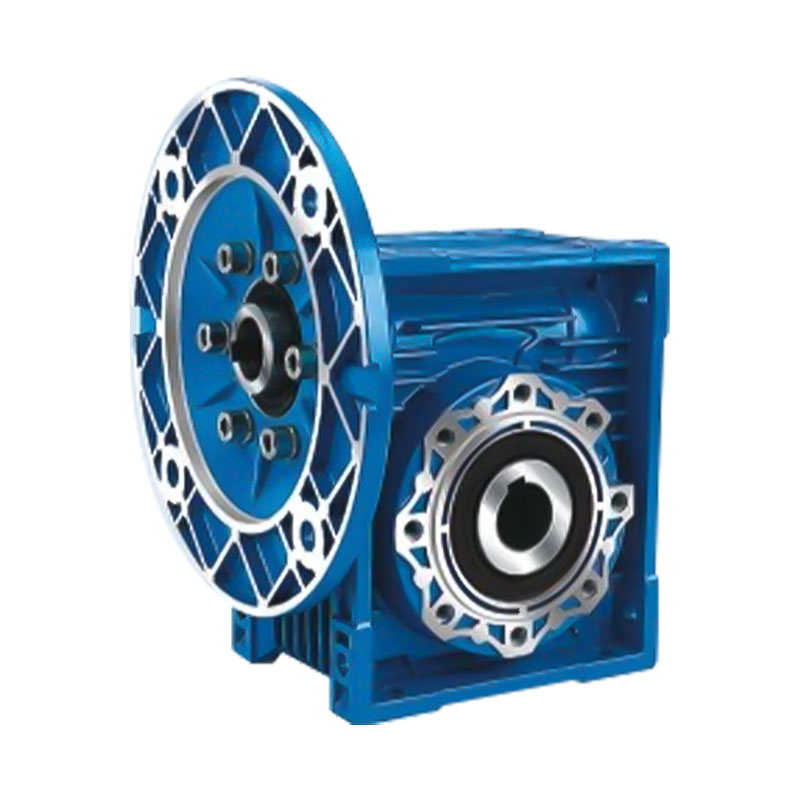
In modern industrial transmission systems, efficient, reliable and compact speed reduction devices are one of the core components that ensure the stable operation of mechanical equipment. With its uni...
See Details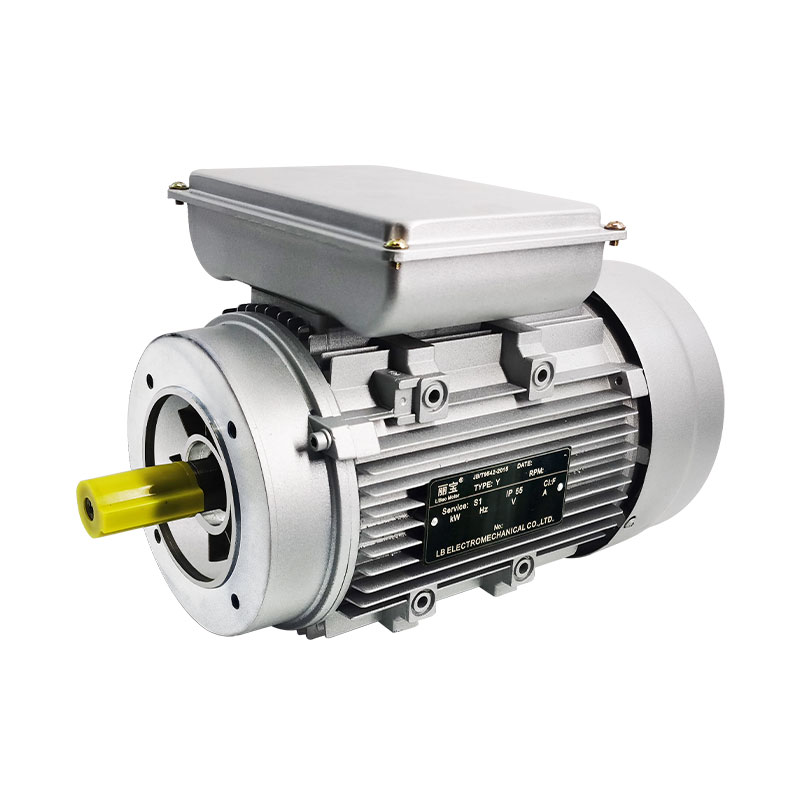
In the huge system of modern electrical equipment, single-phase AC motor is an extremely critical basic component, and its presence is everywhere in all areas of life and production. Whether it is hom...
See DetailsRequest for a call today