English
 中文简体
中文简体 Español
In the realm of mechanical engineering, the planetary gearbox stands as one of the most efficient and reliable components in power transmission systems. From automotive applications to industrial mach...
See Details
When selecting a WP worm gear speed reducer for industrial machinery, the gear ratio is not just a number—it determines torque output, output speed, thermal behavior, and service life. WP series reducers, widely recognized for their cast iron worm gearbox housing and robust performance, offer single-stage ratios from 10:1 to 60:1. Double-stage versions (WPDA double stage reducer) extend the ratio range beyond 100:1. However, an improperly chosen ratio leads to motor overloading, premature wear, or system inefficiency.
This technical guide provides a practical, formula-free methodology to calculate and select the ideal ratio for your application. We will examine real-world variables such as load inertia, duty cycles, thermal limits, and service factors—using data-driven examples without brand bias. By the end, you will be able to match the correct WP worm gear speed reducer ratio to your mechanical power transmission requirements.
The gear ratio (i) of a WPA worm gearbox represents the relationship between input speed (typically from an electric motor) and output shaft speed. A ratio of 30:1 means the input rotates 30 times for each output revolution. This reduction simultaneously multiplies the input torque by the same factor, minus efficiency losses inherent to worm gear geometry.
Key effects of ratio variation within the worm gear reducer ratio 10:1 to 60:1 range:
Understanding this trade-off is the first step before any calculation. Without a proper ratio, even a high-quality cast iron worm gearbox will underperform or fail prematurely.
Before calculating, collect four critical machine parameters. The accuracy of these values directly affects ratio selection.
Determine the shaft speed needed at the driven machine (e.g., conveyor roller, agitator, or press). Units are typically RPM. For example, a mixing tank may require 25 RPM.
Most industrial motors run at 1450 RPM (4-pole, 50 Hz) or 1750 RPM (60 Hz). Gearbox input speed must match motor speed unless a variable frequency drive is used.
Calculate the torque needed to drive the load, considering starting friction, running resistance, and any peak loads. Units: Nm or lb-in. This value determines whether a selected ratio can provide sufficient torque after efficiency losses.
Continuous operation (24/7) requires lower thermal stress than intermittent use. High ambient temperatures (>40°C) reduce the gearbox’s heat dissipation capacity, often necessitating a lower ratio or forced cooling.
All WP series reducers—whether WPS worm gear reducer (hollow shaft) or foot-mounted versions—share these parametric dependencies. Document these four numbers before proceeding.
Follow this practical sequence to determine your ideal ratio. We avoid mathematical notation, instead using plain operational logic.
This iterative process ensures the chosen ratio balances speed, torque, efficiency, and thermal stability without requiring complex equations.
The table below summarizes typical performance for a standard WPA worm gearbox (center distance 80mm, input 1450 RPM, nominal input power 2.2 kW). Values are representative for industrial cast iron units.
| Ratio (i) | Output RPM (1450 input) | Efficiency (%) | Output Torque (Nm) approx. | Typical Application |
|---|---|---|---|---|
| 10:1 | 145 | 88% | 155 | High-speed rollers, fans |
| 15:1 | 96.7 | 85% | 225 | Small conveyors, packaging |
| 20:1 | 72.5 | 82% | 290 | Mixers, agitators |
| 30:1 | 48.3 | 77% | 395 | Machine tools, indexing drives |
| 40:1 | 36.25 | 72% | 485 | Lifts, hoists (intermittent) |
| 50:1 | 29 | 67% | 550 | Heavy conveyors, presses |
| 60:1 | 24.2 | 62% | 610 | High-torque positioning |
Data shows that efficiency decreases as ratio increases. When output torque requirement exceeds the capacity of a single-stage unit, consider the WPDA double stage reducer (series connection of two worm stages), which can achieve ratios up to 3600:1 but with lower overall efficiency (≈45-55%).
Raw ratio calculation is rarely final. Actual machinery experiences shock loads, start-stop cycles, and ambient contaminants. Service factors (SF) adjust the required torque rating upward.
To apply a service factor: Multiply your required output torque by the SF, then select a ratio that provides at least that adjusted torque. For example, a conveyor requiring 300 Nm with moderate shock (SF=1.4) needs 420 Nm. From the table, a 30:1 unit (395 Nm) is insufficient, so move to 40:1 (485 Nm). This may increase ratio, thereby lowering output speed—if speed is critical, a larger frame size (instead of ratio change) might be necessary. Always consult the WP series worm gear catalog for frame-specific torque ratings.
Worm drives generate heat due to sliding friction. When the gearbox temperature exceeds 90°C, oil degrades, and wear accelerates. Thermal power (P_th) is the maximum mechanical power the reducer can transmit continuously without overheating, typically defined at ambient 20°C.
For a cast iron worm gearbox of center distance 80mm, thermal power might be 3.5 kW at 1500 RPM input. If your application requires 4 kW at a 40:1 ratio, the gearbox will overheat unless a cooling fan or larger size is used. Critical relationship:
Practical tip: For 24/7 operation at ratios above 40:1, select one frame size larger than torque-only calculations suggest. This increases thermal mass and surface area, preventing premature seal and bearing failure.
The WPDA double stage reducer consists of two worm gear stages in series. It achieves ratios from 100:1 up to 3600:1. However, overall efficiency is the product of each stage’s efficiency (e.g., 0.75 × 0.75 = 0.56). Therefore, WPDA units are only recommended when:
When calculating the ideal ratio for a double-stage reducer, first decide the distribution between the primary and secondary stage. As a rule, keep the first stage ratio lower (e.g., 10:1 to 20:1) to maintain reasonable efficiency, then the second stage provides the remaining multiplication. For an overall need of 300:1, a common split is 15:1 × 20:1. Always verify thermal ratings for both stages.
Scenario: A carton packaging line requires a conveyor belt speed of 25 RPM. Motor available: 1450 RPM, 2.2 kW. Load torque measured: 180 Nm continuous, with moderate shock (SF = 1.3). Ambient temperature 35°C, 16 hours/day operation.
Step 1 – Raw ratio: 1450 / 25 = 58:1. Nearest standard WP ratios: 50:1 and 60:1.
Step 2 – Torque requirement adjusted for SF: 180 Nm × 1.3 = 234 Nm required output torque.
Step 3 – Check each ratio’s output torque (using typical values for a size 100 WP reducer): At 50:1, output torque ≈ 550 Nm (far above 234 Nm). At 60:1, ≈ 610 Nm. Both satisfy torque. However, efficiency at 60:1 is only 62%, generating more heat.
Step 4 – Thermal check: For a size 100 cast iron worm gearbox, thermal rating at 1450 RPM is approximately 2.8 kW at 35°C ambient. Required input power = (output torque × output speed) / (9550 × efficiency). For 50:1 (efficiency 67%): Power_in = (234 × 25) / (9550 × 0.67) ≈ 0.91 kW. Well under 2.8 kW. For 60:1 (62%): Power_in = (234 × 25) / (9550 × 0.62) ≈ 0.99 kW. Still acceptable. The 50:1 ratio is slightly closer to the raw requirement, providing output speed 29 RPM vs desired 25 RPM – an acceptable 16% deviation. Final selection: WP 50:1.
Alternative: If the process required exactly 25 RPM, a 60:1 ratio delivering 24.2 RPM (3% error) would be ideal. This case illustrates that ratio selection involves trade-offs between exact speed, thermal margin, and available standard ratios.
WP is the base cast iron housing series. WPA indicates an input flange-mounted version (NEMA or IEC motor adapter). WPS features a hollow output shaft for direct shaft mounting. All share the same internal worm gear sets and ratio range (10:1 to 60:1 for single stage).
No. Single-stage worm reducers have practical ratio limits due to tooth geometry and efficiency. Ratios below 5:1 are possible but rarely used because the worm becomes inefficient. For ratios above 60:1, a double-stage unit (WPDA double stage reducer) is necessary to maintain acceptable contact ratio.
Self-locking occurs when the friction angle of the worm gear exceeds the lead angle. In practice, ratios of 30:1 and higher generally provide self-locking under ideal conditions. However, shock loads or oil with high lubricity can break self-locking. Always verify with the manufacturer’s data.
At proper lubrication and within thermal limits, a cast iron worm gearbox can exceed 25,000 hours of operation. Higher ratios (≥ 50:1) reduce bearing life due to increased thrust loads; accordingly, L10 life might be 15,000-20,000 hours. Periodic oil changes (every 3,000-5,000 hours) are critical.
Follow the same step logic: divide motor speed by required output speed. For a 1120 RPM motor and 35 RPM output, raw ratio = 32:1. The closest standard ratio is 30:1 (output 37.3 RPM) or 40:1 (output 28 RPM). Select based on torque priority. If exact speed is mandatory, consider a variable sheave or a WPA worm gearbox with a motor adapter that allows using a different motor base speed.
The following flowchart summarizes the rational decision process for selecting the ideal ratio for your WP worm gear speed reducer. Follow each decision node to avoid common pitfalls.
Calculating the ideal gear ratio for a WP worm gear speed reducer is a multi-objective decision that balances output speed, torque capacity, efficiency, thermal limits, and service conditions. By following the logical workflow presented—starting from raw ratio determination, matching standard values (10:1 to 60:1), applying service factors, verifying torque after efficiency correction, and checking thermal ratings—you can avoid common oversizing or undersizing mistakes.
Remember that WP series reducers are engineered for durability, but their cast iron housings and worm gear sets perform optimally only when the ratio aligns with the application’s real demands. For extreme ratios or space-constrained layouts, the WPDA double stage reducer offers a solution, albeit at lower efficiency. Always consult the WP series worm gear catalog for frame-specific mechanical and thermal data. With these technical guidelines, you are equipped to select the exact reduction that maximizes uptime and component life.
For further assistance or to explore the full range of cast iron worm gearbox configurations, refer to manufacturer documentation or contact application engineering support.
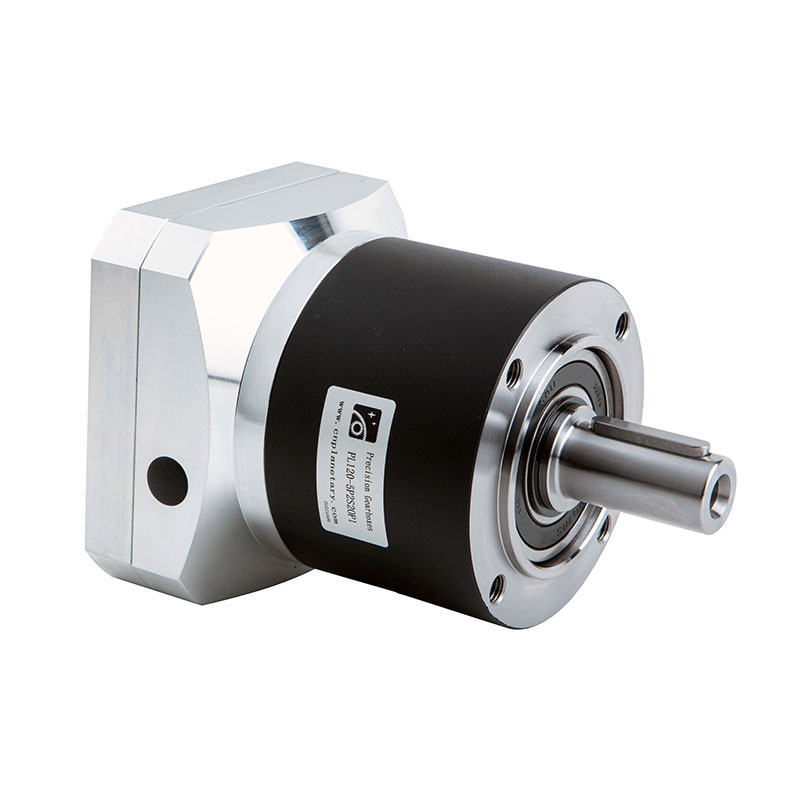
In the realm of mechanical engineering, the planetary gearbox stands as one of the most efficient and reliable components in power transmission systems. From automotive applications to industrial mach...
See Details
With the rapid development of industrial technology, mechanical equipment has become increasingly important in all walks of life and has become a key factor in promoting the improvement of productivit...
See Details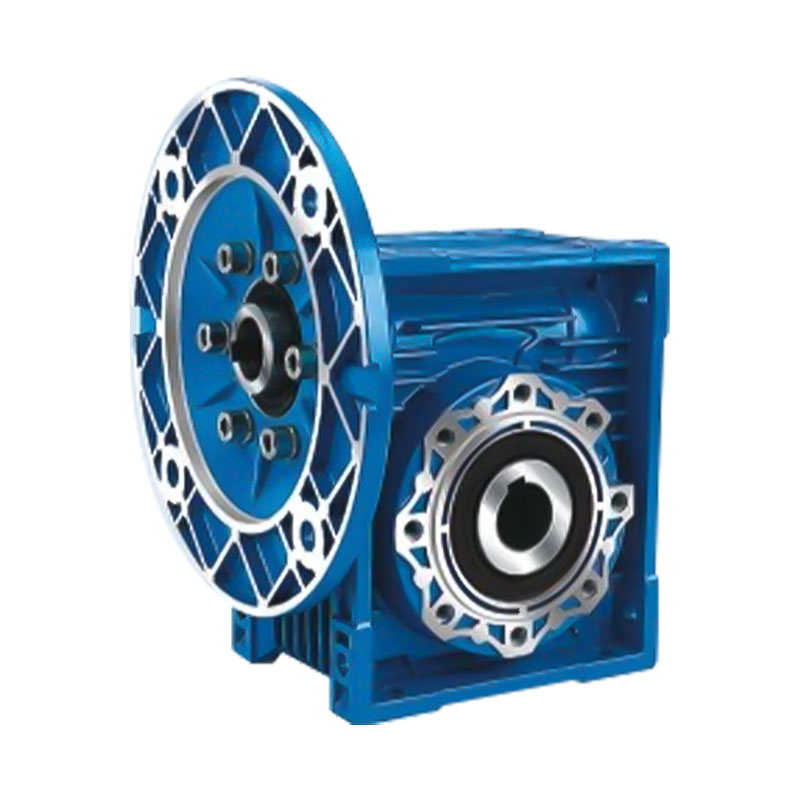
In modern industrial transmission systems, efficient, reliable and compact speed reduction devices are one of the core components that ensure the stable operation of mechanical equipment. With its uni...
See Details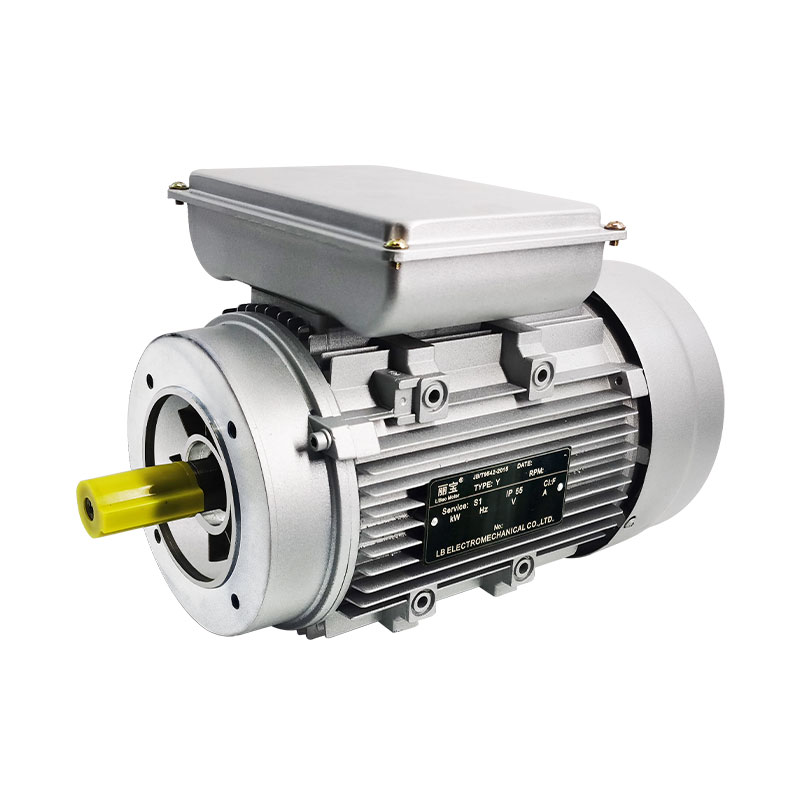
In the huge system of modern electrical equipment, single-phase AC motor is an extremely critical basic component, and its presence is everywhere in all areas of life and production. Whether it is hom...
See DetailsRequest for a call today